My wife posted my blog entries on her Facebook page (I got rid my my account years ago, so her page is a primary source for channeling my writing), and, perhaps unsurprisingly, received only a few reactions. Little, if any, comments. She then posted a picture of our dog – he is cute – and boom, 103 likes.
Part of me understands this. The war in Gaza is horrifying, painful to watch, and seemingly unending. The violence continues as the living conditions degrade well beyond any measure of human dignity – little or no access to water, hours to wait to use a toilet, just as many hours waiting for the possibility of a loaf of bread, no electricity, dwindling access to adequate medical care, and the constant fear of bombardment. The onslaught of images has been giving me nightmares, the likes of which I have not had since the Twin Towers collapsed. The turmoil consuming the region is manifesting itself in violence in the West Bank as well – apart from the more than 11,000 casualties in Gaza, there have been 185 fatalities in the West Bank as of November 12. Combined with the continuing hostage crisis with 240 Israelis and foreign nationals held in Gaza and 1,200 Israelis killed October 7, the spillover effect of this war is being felt worldwide. Hate speech online against Jews and Arabs has spiked in the last month, and acts of violence against those communities, including shots fired multiple times at Jewish schools here in Montreal, is frightening and profoundly upsetting.
No wonder people just want to see pictures of a fluffy poodle. So do I.
But I think – or at least I hope – that we owe it to others who are suffering greatly to demonstrate a level of empathy for their plight and a capacity to act in their defence. A simple “like” on a post advocating for a ceasefire, or a humanitarian corridor, or an appeal for donations, or a call for greater understanding and kindness, is a small but meaningful act that uplifts the spirits of those advocating for change. Go a step further and sign a petition for a ceasefire; write to your Member of Parliament and urge them to advocate for one as well. Speak out against hate crimes – after the shootings at the Montreal Jewish schools over the past few days, leaders have been saying “This is not us.” Well, it is now, and we have to face it. Take a look at those puppy pictures, but don’t shy away from the rest of the crap going on around us.
We can’t shy away from the ever-deepening crisis in Gaza and its ripple effects worldwide – the igniting and re-igniting of feelings, attitudes, and beliefs that support and feed off hatred, ignorance, and fear of those we naively categorize as “others.” A recent article in the Economist by philosopher David Enoch argues that much of the public discourse on the Israel-Gaza war is “depressingly simplistic.” When media coverage focuses on Pro-Israeli and Pro-Palestinian protesters yelling at each other, as they did in the halls of my old university, Concordia, last week, it’s easy to side with this view of public discourse.
I am by no means an expert on the Israel-Gaza war; I am an educator by profession, and one who values and practices human rights. I’ve worked in Gaza and the West Bank over several years for UNRWA, and sat down with hundreds of children, parents, teachers, and human rights advocates in the Occupied Palestinian Territories to learn about peoples’ lives, understand their culture, and find some pathway to peace in which the people I worked for can find some solace in knowing that their world can be better through the appreciation and sharing of common values to all human beings – respect for others, equality and non-discrimination, inclusion, and the establishment of strong community links. These were values identified by the Palestinians I engaged with; these values came to light through the discourse that Palestinians engaged in when reflecting on the meaning of human rights. It was an understandably challenging space for many Palestinians to grapple with. During one of my first meetings, in Tripoli, northern Lebanon, I met with a group of community leaders from an UNRWA refugee camp for Palestinians. My presence was greeted with staunch, vocal opposition. “How can you speak to us of rights,” said one man, “when we have been deprived of our right to return for all these years? How can you speak of rights when we have none?”
In the end, we did speak of rights, in a manner that was meaningful to the development of children’s learning, and unique to the context of Palestinian refugees. There was no place for hate speech, there was no tolerance for discrimination, there was only space to learn about human rights. The road back to that space is out of reach for all Gazans; with 45% of homes either destroyed or damaged in the Gaza Strip, the task of rebuilding homes will be tenuous. The task of rebuilding lives traumatized by this war will last a lifetime.
I get it. More puppies, less death, destruction and despair. I want to say that the puppy stuff is necessary; we need to see stuff that will make us feel better. But we also owe it to those who are suffering – and to ourselves – not to avoid addressing the violence unfolding in Gaza. It’s OK to feel pain and empathy for the families of the hostages in Israel while also feeling sorrow and pain for the Palestinians being bombarded in Gaza – there has to be space in everyone’s hearts to empathize with all victims. This care for others also implies that moral opposition to the Israeli government’s unrelenting punishment of the Palestinian people is a statement against a government, not its people; likewise, a denouncement of the attacks perpetrated by Hamas on innocent Israeli civilians is aimed at the terrorist group, whose methods and aims are not representative of what the overwhelming majority of Palestinians espouse. One can express disagreement, outrage, and disapproval with an authority in power while advocating for the rights of ordinary people who live within that authority’s grasp.
In late October, the head of UNRWA, Philippe Lazzarini, wrote that “History will judge us all if there is no ceasefire in Gaza.” Weeks later, as the bombings continue unabated, the UN marked a sombre milestone with over 100 UNRWA employees killed since the war began. This must stop. There comes a point when the cycle of violence must end, when methods other than the indiscriminate killing of innocent civilians need to be identified as alternative means to destroy Hamas.
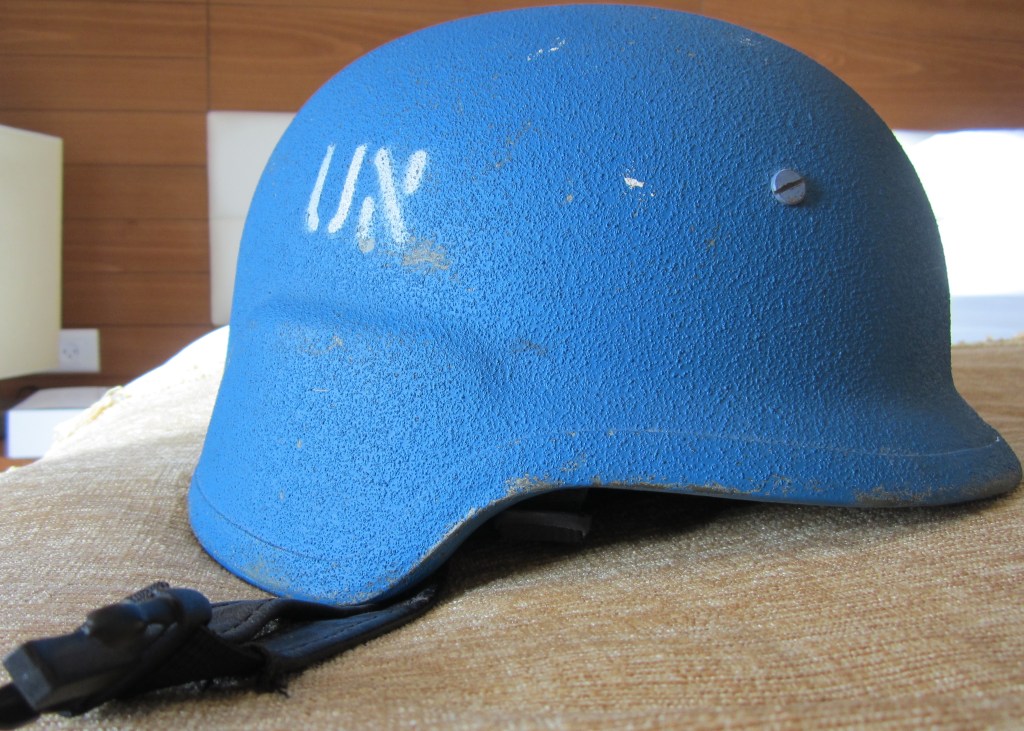
I’m reminded of a line from a book by one of my favourite authors when I was a teenager, Isaac Asimov. In the book science fiction novel Foundation, published in 1951 (Asimov started writing the book as short stories 10 years earlier, at the age of 21), one of the book’s characters says, “Violence is the last refuge of the incompetent.” He likely had no idea how prescient his writing would be decades later. Any pathway to peace must begin with the end of violence. Our collective humanity cannot suffer at the hands of the incompetent. I can hug my puppy and advocate for peace.


 paul mcadams - a change is coming
Leave a comment